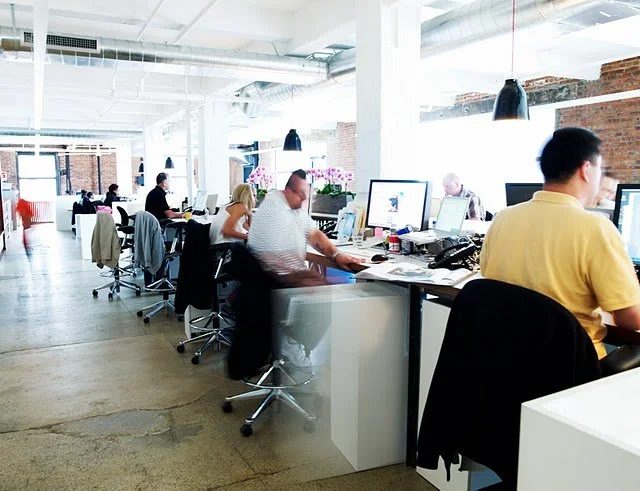
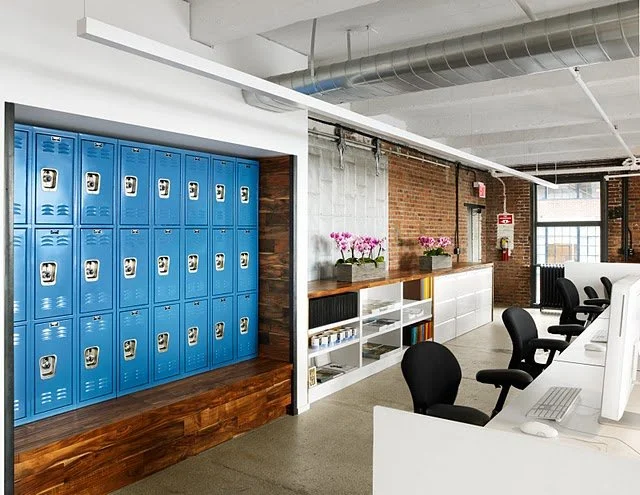
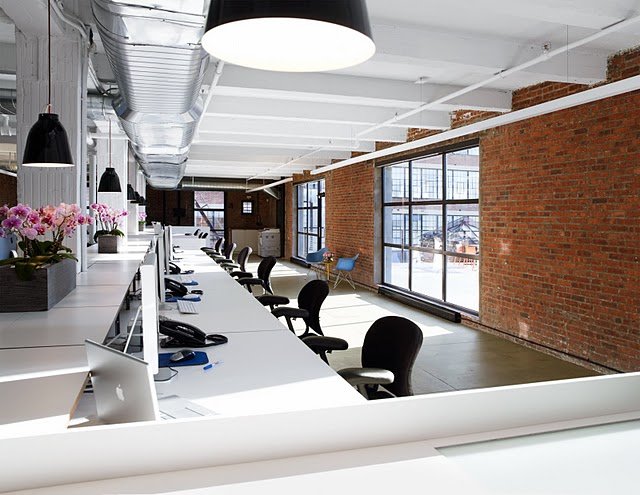
THELAB - NYC, NYOVERALL, WE WANTED IT TO BE MODEST AND BEAUTIFUL, TO REPRESENT WHO WE ARE AS A COMPANY, AND WHAT WE VALUE AS INDIVIDUALS. WE WANTED PEOPLE TO BE ABLE TO INSTANTLY SEE THOSE PARTS OF US WHEN THEY WALK OFF THE ELEVATOR. AESTHETICALLY, WE WANTED TO CREATE A SIMPLE, UNDERSTATED SPACE THAT DOESN’T OVERPOWER THE ORIGINAL CHARACTER OF THE BUILDING.
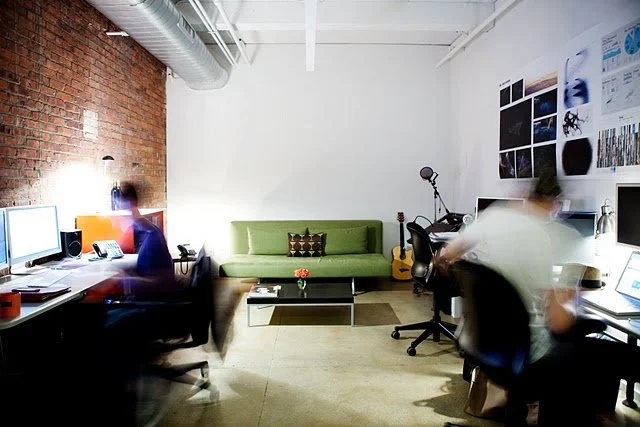
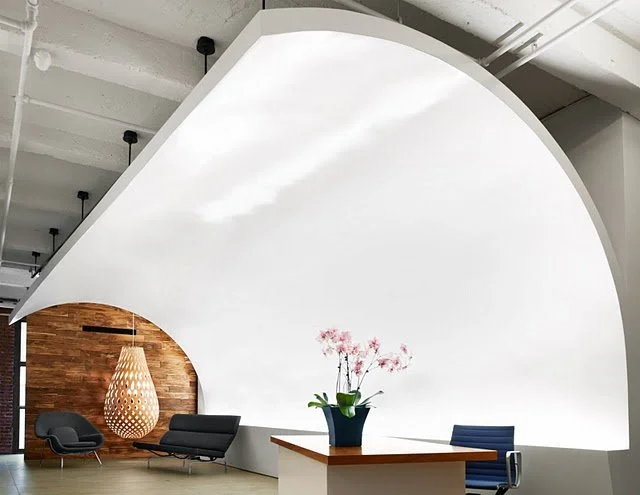
What do Andy Warhol, the Guardian Angels, and the Hudson River have in common? They’ve visited, inhabited, or flow just outside a split-level warehouse that fills and entire New York City Block between Eleventh and Twelfth Avenues, and in some of 16,500 square feet of the available 1.2-million-square-feet space, you’ll find the headquarters for thelab, a media arts company.
Thelab occupies three adjacent 5,500-square-foot floors on the eighth storey of this behemoth building, which was originally constructed in 1891, dockside along the Hudson, and where the former railroad tracks transported trains filled to brimming with goods to be manufactured or sold. Known as the Terminal Stores building, the warehouse’s exterior conjures images of a fortress, complete with brick parapets facing Eleventh Avenue.
The block-long structure today houses twenty-five individual multi-storey subsections that are either connected or adjacent to each other, accessible by a central “tunnel” where the rail line once existed. In March 2009, thelab relocated to this site after outgrowing its former headquarters on Madison Avenue.
Thelab’s CEO David Bridges, offers, “We’ve been in several different offices over the years, so we had the benefit of being able to think about everything we’ve learned, with respect to our workspace, and apply it here. It was important that we didn’t have any ‘should haves’ or regrets—we carefully reviewed what worked well for us and identified things that we’d omitted in the past.”
Bridges and his colleagues consulted with designer Robert Kellogg of HOK; thelab had worked with Kellogg on previous Office designs and trusted his vision and understanding of their need for specialty cabinetry and color-balanced lighting. Bridges says, “Our business requires specific light levels, color temperature, workstations, and accessories, in addition to state-of-the-art technological infrastructures. Bob completely understands all of these requirements, so we could focus on the design elements, without wasting time listing everything we needed, or making corrections to bring a design in line with our standards.”
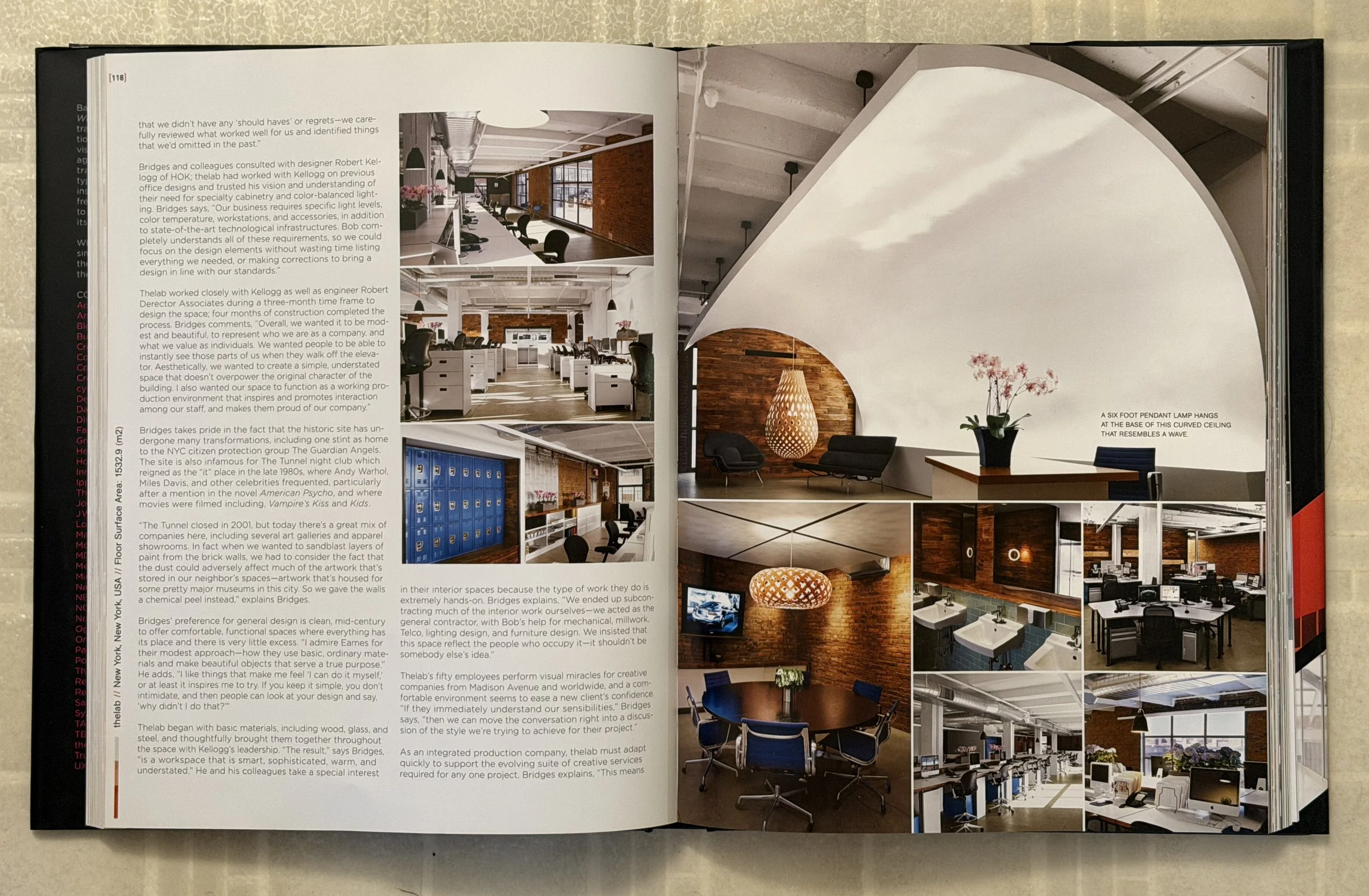
Thelab worked closely with Kellogg as well as engineer Robert Derector Associates during a three-month time frame to design the space; four months of construction completed the process. Bridges comments, “Overall, we wanted it to be modest and beautiful, to represent who we are as a company, and what we value as individuals. We wanted people to be able to instantly see those parts of us when they walk off the elevator. Aesthetically, we wanted to create a simple, understated space to function as a working production environment that inspires and promotes interaction among our staff, and makes them proud of our company.”
Bridges takes pride in the fact that the historic site has undergone many transformatinos, including one stint as home to the NYC citizen protection group The Guardian Angels. The site is also infamous for The Tunnel night club which reigned as the “it” place in the late 1980s, where Andy Warhold, Miles Davis, and other celebrities frequented, particularly after a mention in the novel American Psycho, and where movies filmed including, Vampire’s Kiss and Kids.
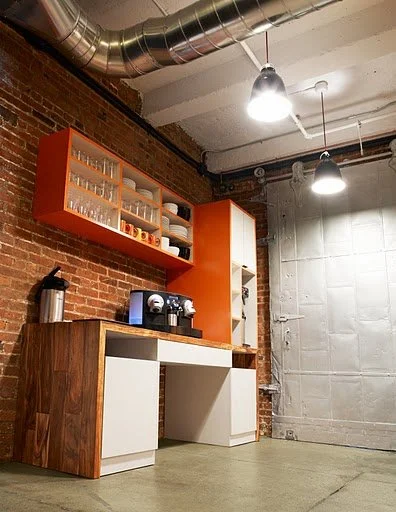
“The Tunnel closed in 2001, but today there’s a great mix of companies here, including several art galleries and apparel showrooms. In fact when we wanted to sandblast layers of paint from the brick walls, we had to consider the fact that the dust could adversely affect much of the artworks that’s stored in our neighbor’s spaces—artwork that’s housed for some pretty major museums in this city. So we gave the walls a chemical peel instead,” explains Bridges.
Bridges’ preference for general design is clean, mid-century to offer comfortable, function spaces where everything has it’s palce and there is very little excess. “I admire Eames for their modest approach—how they use basic ordinary materials and make beautiful objects that serve a true purpose.” He adds, “I like things that make me feel ‘I can do it myself,’ or at least inspires me to try. If you keep it simple, you don’t intimidate, and then people can look at your design as say, ‘why didn’t I do that?’”
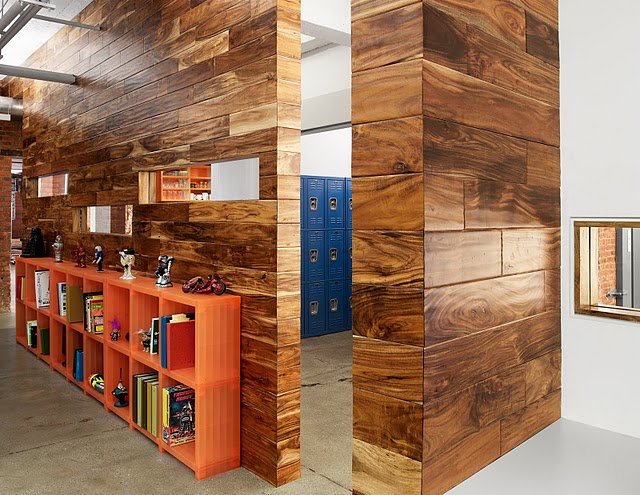
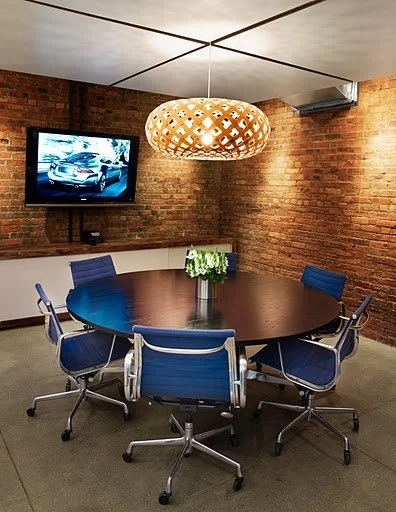
Thelab began with basic materials, including wood, glass, and steel, and thoughtfully brought them together through the space with Kellogg’s leadership. “The result,” says Bridges, “is a workspace that is smart, sophisticated, warm, and understated.” He and his colleagues take a special interest in their interior spaces because the type of work they do is extremely hands-on. Bridges explains, “We ended up subcontracting much of the interior work ourselves—we acted as the general contractors, with Bob’s help for mechanical, millwork, Telco, lighting design, and furniture design. We insisted that this space reflect the people who occupy it—it should be somebody else’s idea.”
Thelab’s fifty employees perform visual miracles for creative companies from Madison Avenue and worldwide, and a comfortable environment seems to ease a new client’s confidence. “If they immediately understand our sensibilities,” Bridges says, “then we can move the conversation right into a discussion of the style we’re trying to achieve for their project.”
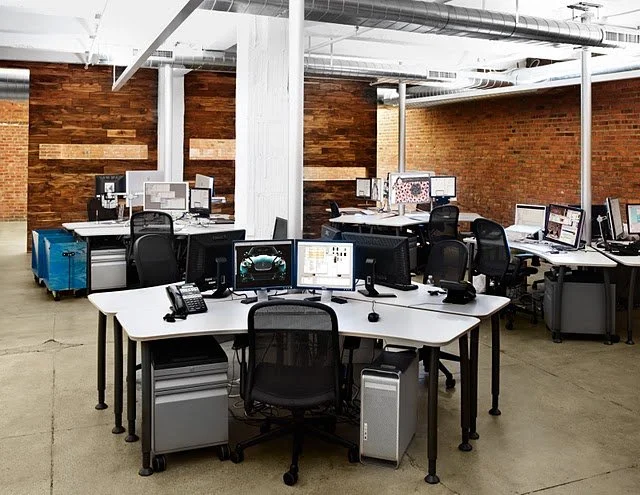
As an integrated production company, thelab must adapt quickly to support the evolving suite of creative services required for any one project. Bridges explains, “This means we need the ability to set up areas within our space for various creative and production teams, while maintaining all the benefits our space has to offer. Thelab has a number of different types of artists here, and in many cases most of them touch a project as it makes the rounds. How the office is configured is critical to our process.”
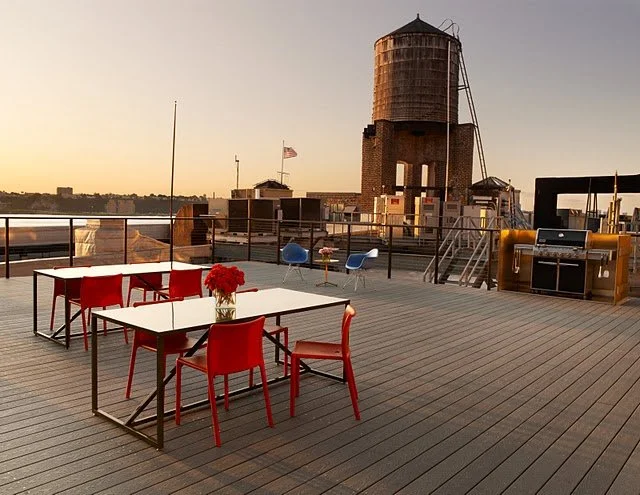
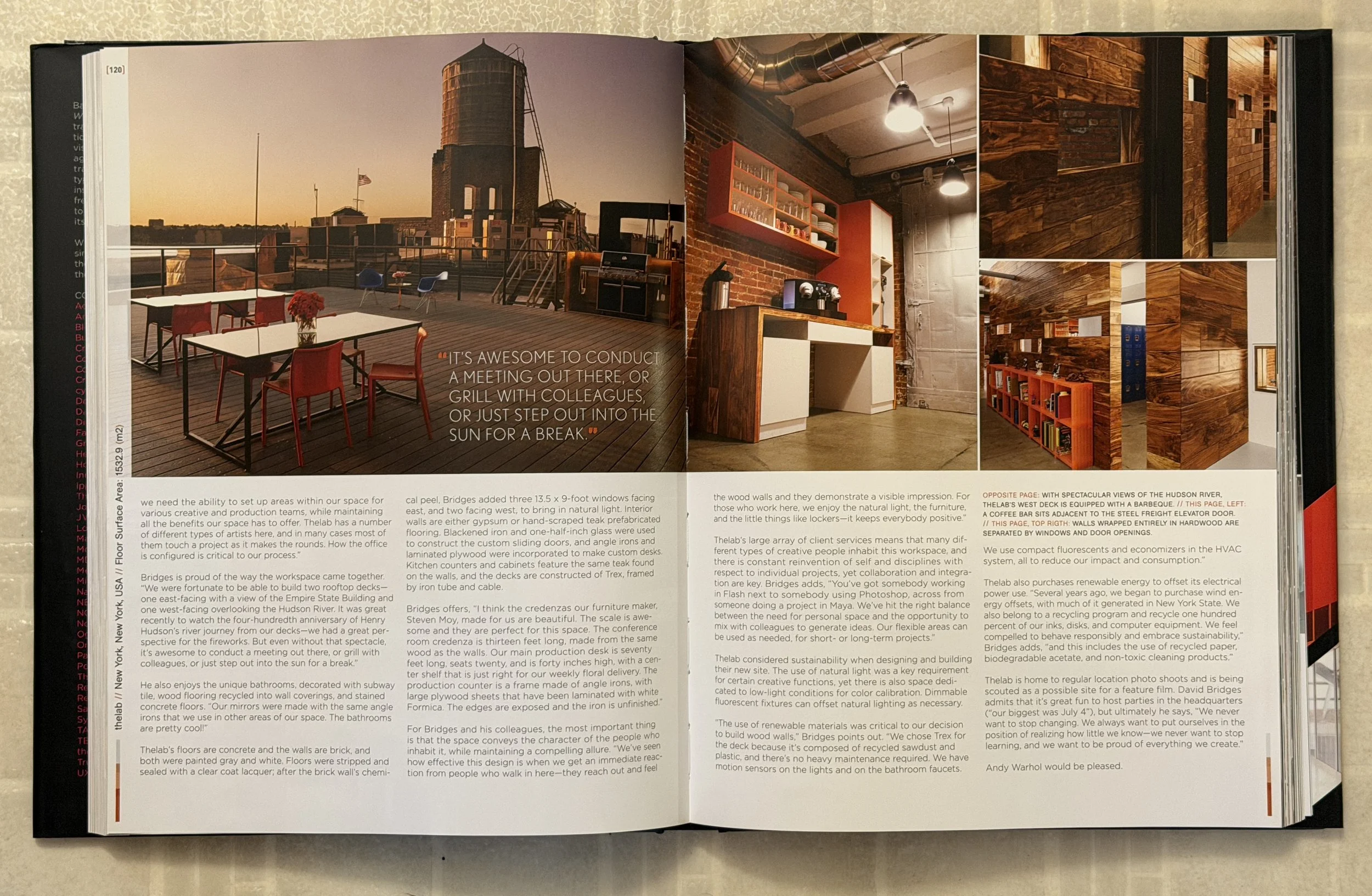
Bridges is proud of the way the workspace came together. "We were fortunate to be able to build two rooftop decks—one west-facing with a view of the Hudson River. It was great recently to watch the four hundredth anniversary of Henry Hudson’s river journey from our decks—we had a great perspective for the fireworks. But even without that spectacle, it's awesome to conduct a meeting out there, or grill with colleagues, or just step out into the sun for a break."
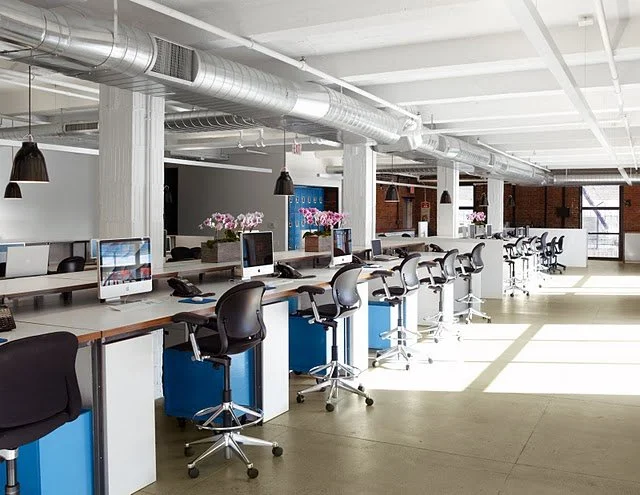
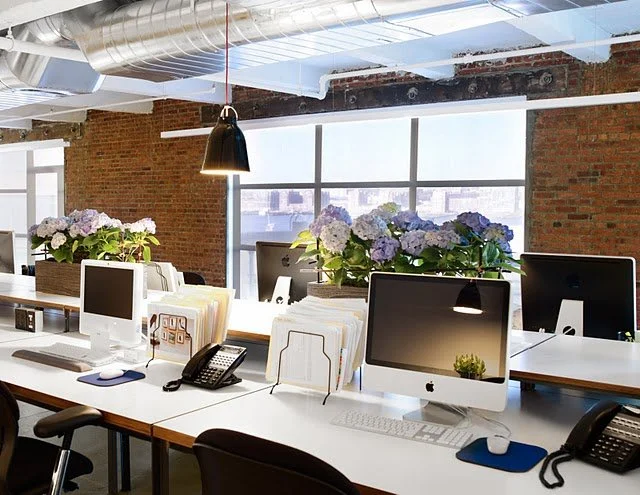
Bridges offers, "I think the credenzas our furniture maker, Trevor May, made for us are beautiful. The scale is awesome and they are perfect for this space. The conference room credenza is thirteen feet long, made from the same wood as the walls. Our main product on desk is seventy feet long, seats twenty, and is forty inches high, with a core made of plywood sheets that have been laminated with white Formica. The edges are exposed and the iron is unfinished."
For Bridges and his colleagues, the most important thing is that the space conveys the character of the people who inhabit it, while maintaining a compelling allure. "We’ve seen how effective this design is when we get an immediate reaction from people who walk in here—they reach out and feel the stone walls and they demonstrate a visible impression. For those who work here, we enjoy the natural light, the furniture, and the little things like flowers—it keeps everyone positive."
THELAB’s large array of client services means that many different types of creative people inhabit this workspace, and there is constant reinvention of self and disciplines within these walls. Bridges adds, "You’ve got somebody working in Flash next to somebody using Photoshop, across from someone doing a project in Maya. We've hit the right balance between the need for personal space and the opportunity to mix with colleagues to generate ideas. Our flexible areas can be used as needed, for short- or long-term projects."
THELAB considered sustainability when designing and building their new site. "The use of natural light was a key requirement for certain creative functions, yet there is also space dedicated to low-light conditions for color calibration. Dimmable fluorescent fixtures can offset natural lighting as necessary. The use of renewable materials was critical to our decision to build wood walls," Bridges points out. "We chose ‘Tree' for the deck because it's composed of recycled sawdust and plastic, and there is no heavy maintenance required. We have motion sensors on the lights and on the bathroom faucets. We use compact fluorescents and economizers in the HVAC system all to reduce our impact and consumption."
THELAB also purchases renewable energy to offset its electrical power use. "Several years ago, we began to purchase wind energy offsets, with much of it generated in New York State. We also belong to a recycling program and recycle one hundred percent of our junk mail, disks, and computer equipment. We feel compelled to behave responsibly and embrace sustainability," Bridges adds, "and this includes the use of recycled paper, biodegradable acetate, and non-toxic cleaning products."
THELAB is home to regular fashion photo shoots and is being scouted as a possible site for a feature film. David Bridges admits that it’s great fun to host parties in their headquarters ("our biggest was July 4"), but ultimately he says, "We never want to stop changing. We always want to put ourselves in the position of realizing how little we know—we never want to stop learning, and we want to be proud of everything we create."
Andy Warhol would be pleased.
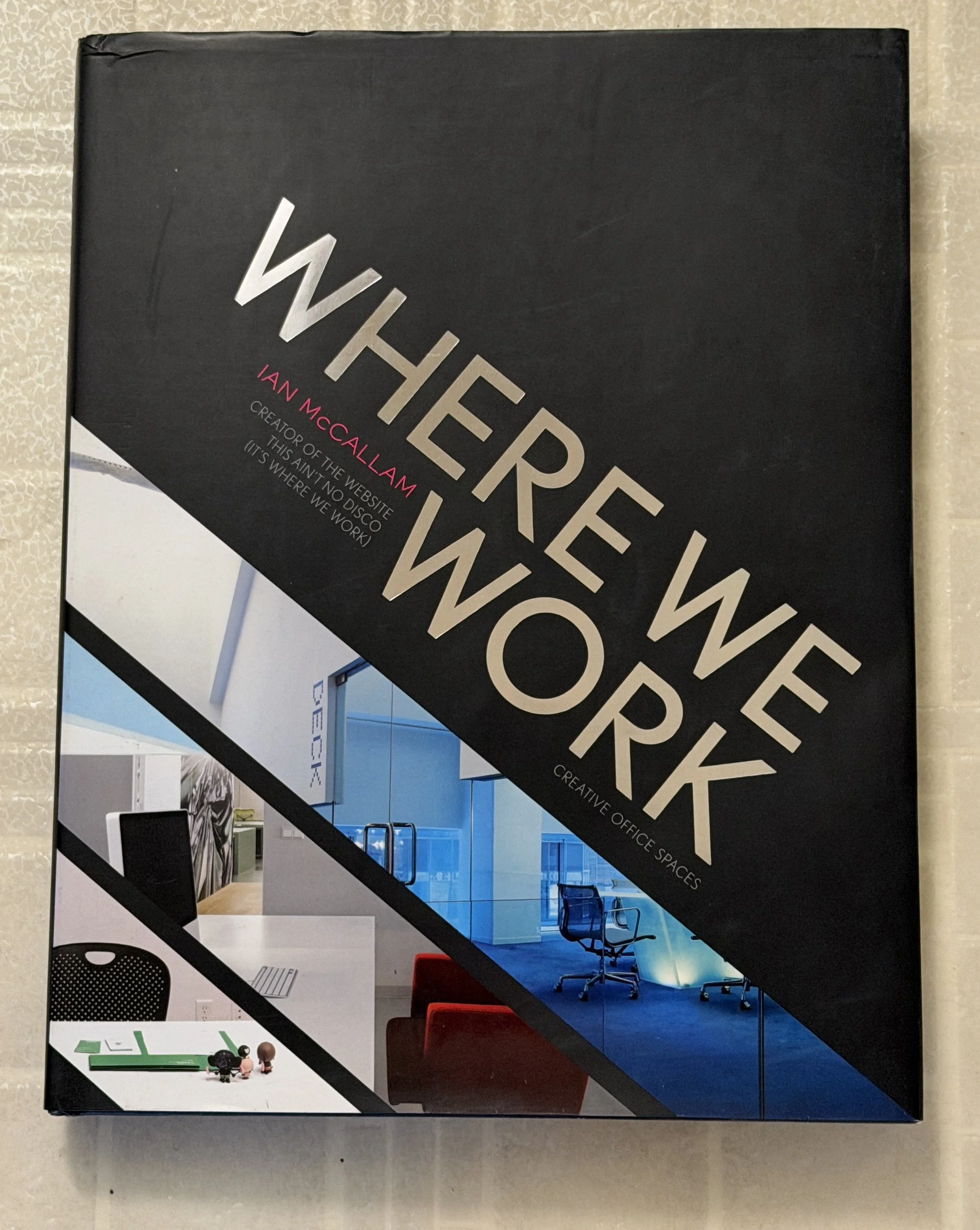
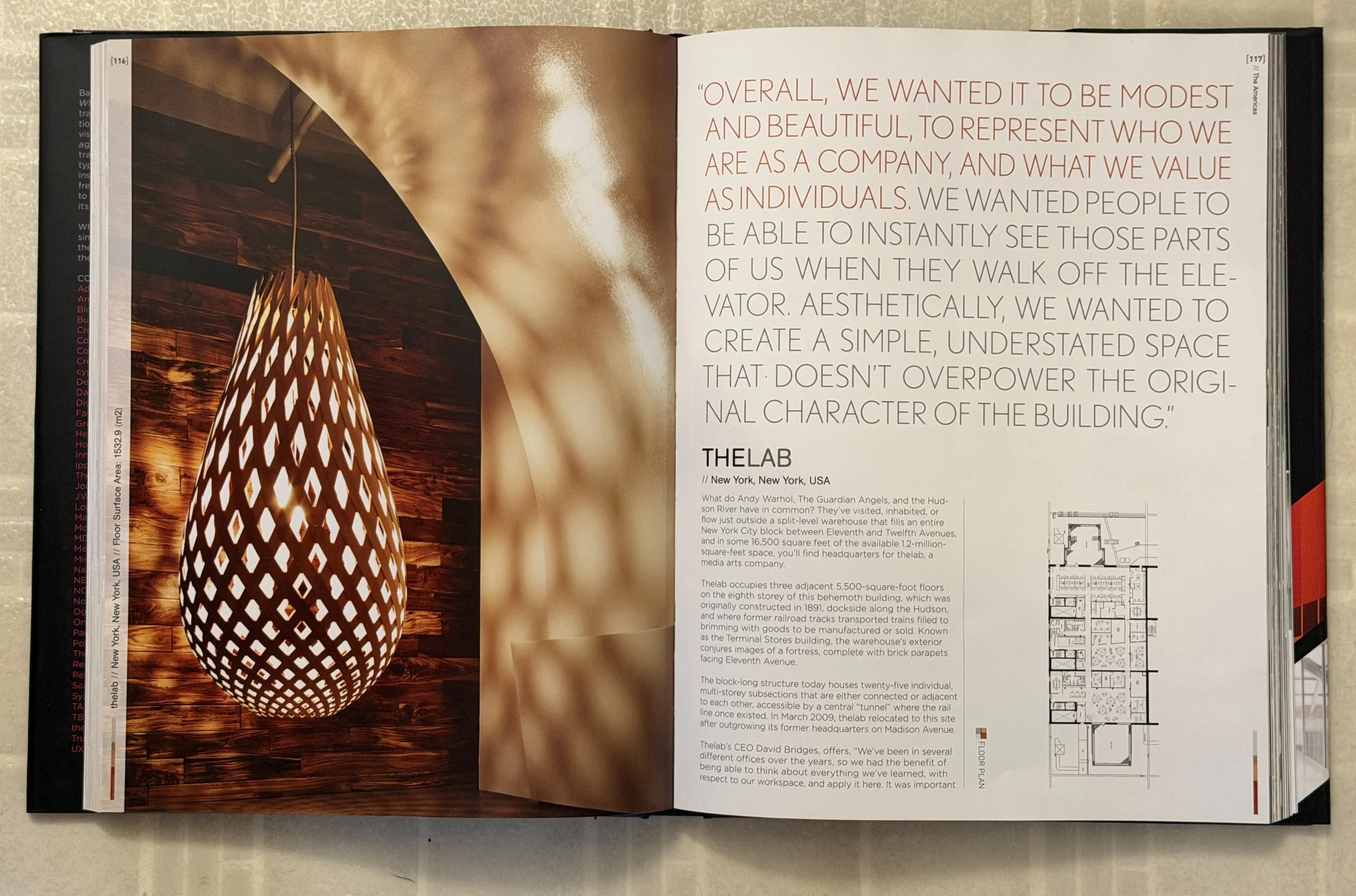
I was honored to ghost write the article that was published in the collection of office interiors called “WHERE WE WORK”